
Eamonn
Google customer review
Tom and his gang did a fantastic job with our new tarmac drive. Didn't take long to do two and a half days. They are very reliable and just crack on with the job i highly recommend Pavemaster Driveways. Great job guys.
Tarmac surface options
Tarmac driveways loughborough with practical site guidance, clear specifications and free measured quotations for suitable projects.
Free no-obligation quote
Tell us about your project
Tarmac surface options
Tarmac is often chosen for its restrained appearance and ability to cover broad areas without a large number of visible joints. It can suit everything from a compact drive beside a terraced or semi-detached property to a wider frontage where several vehicles need to park and turn.
A tarmac specification should be based on the use of the drive. Areas exposed to turning wheels, delivery vehicles or narrow entry points need particular attention because these movements place additional pressure on the surface and edges. The site visit also checks whether borders, channels or a paved threshold would improve containment and appearance.
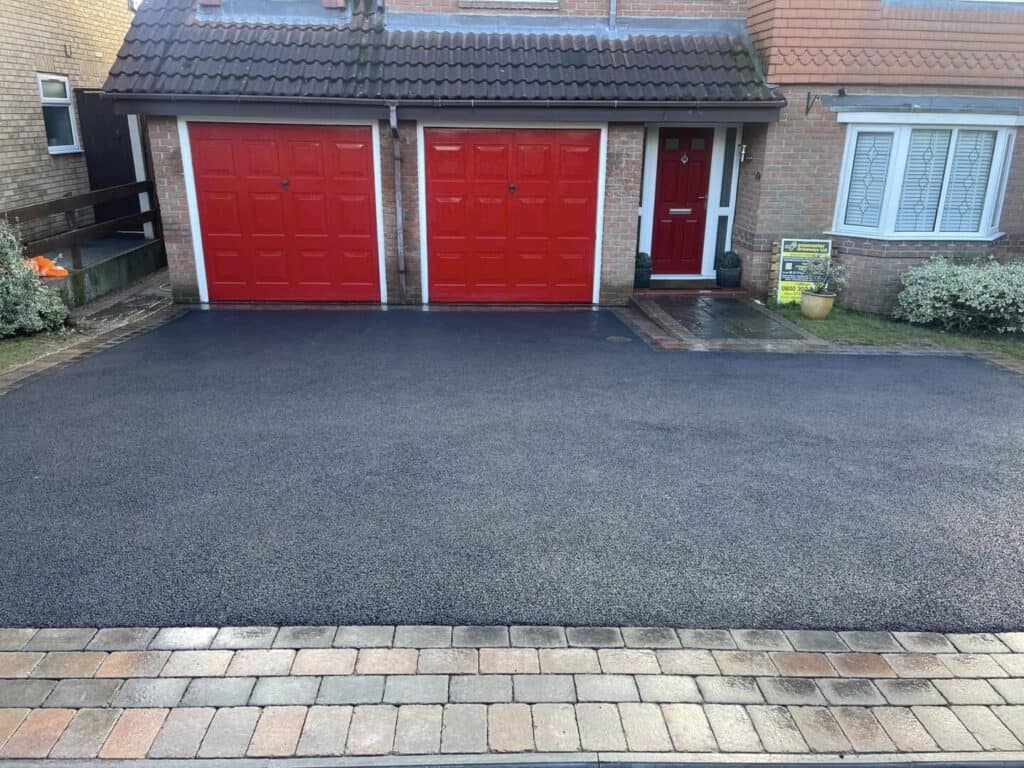
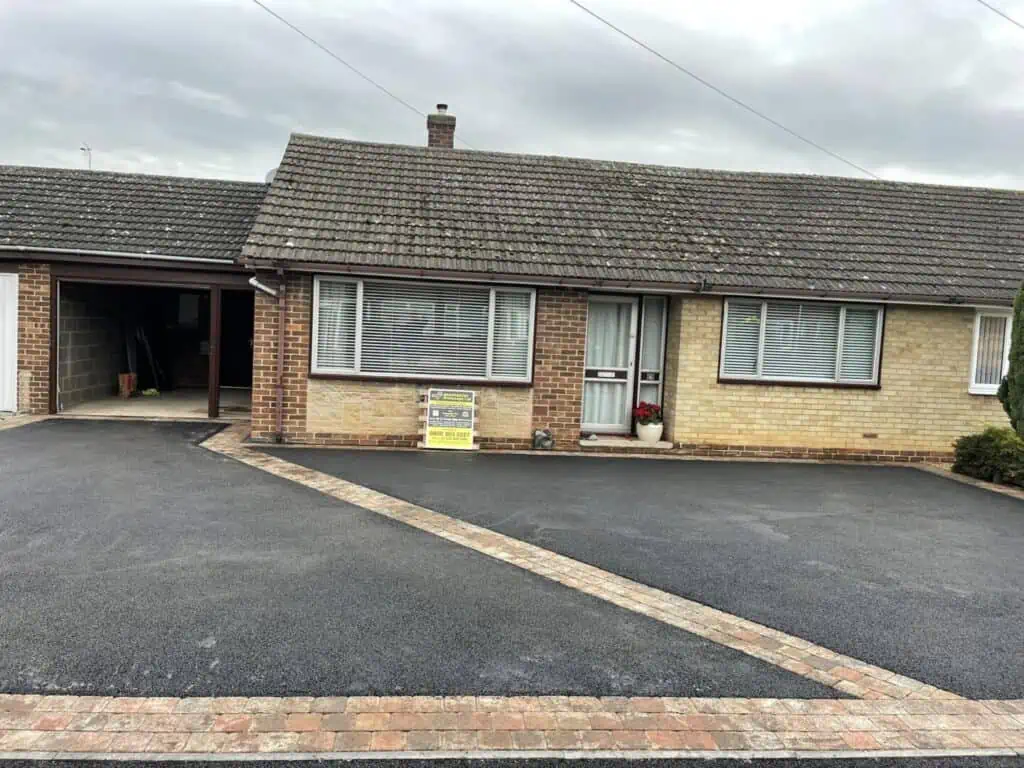
Homeowners can combine a tarmac field with a block-paved border, path or entrance apron. The paving should not be added as decoration alone; it can help define pedestrian routes, contain vulnerable edges and connect the drive to the brickwork or paving already around the property.
Tarmac surface options
An overlay places a new tarmac layer over an existing bound surface. It may be suitable when the base is stable, the surface is correctly shaped and the additional thickness will not create problems at thresholds, covers or the pavement.
An overlay is not a reliable answer for a drive with:
Where these problems exist, the old surface and failed material normally need to be removed. A new sub-base and correct levels can then be established before the tarmac is installed.
The quotation should state whether the work is an overlay or a full reconstruction. These are different specifications and should not be compared as if they include the same preparation.
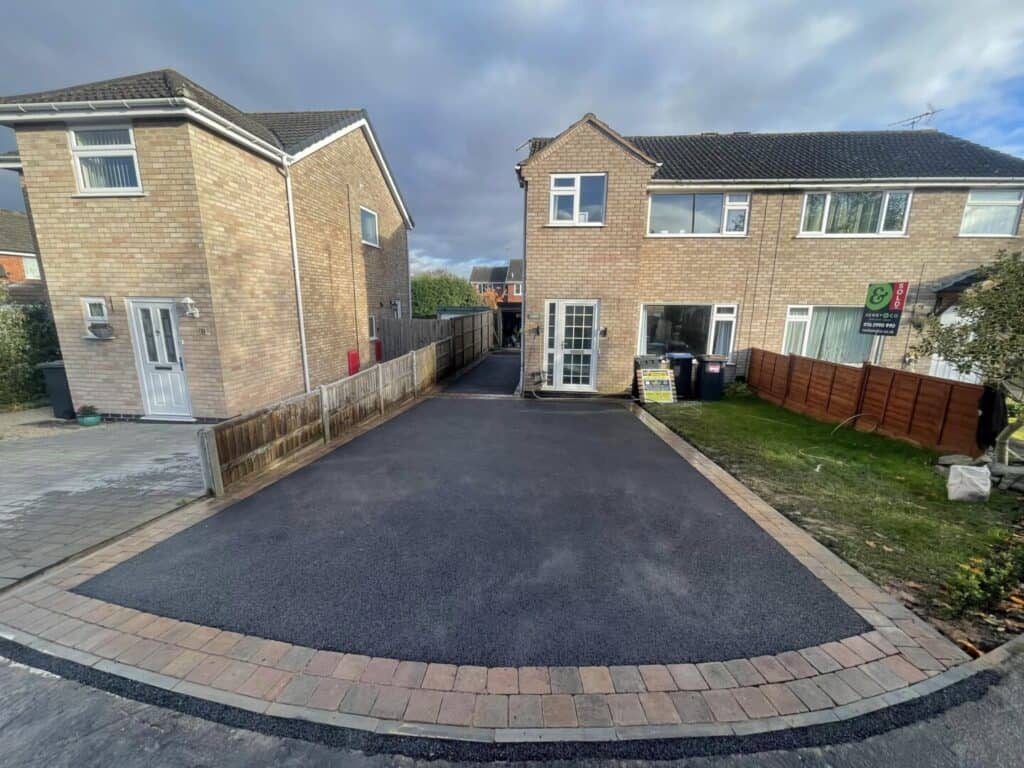
Tarmac creates a visually calm surface that can work well with brick, render, stone and modern extensions. It does not rely on multiple colours or patterns to define the parking area.
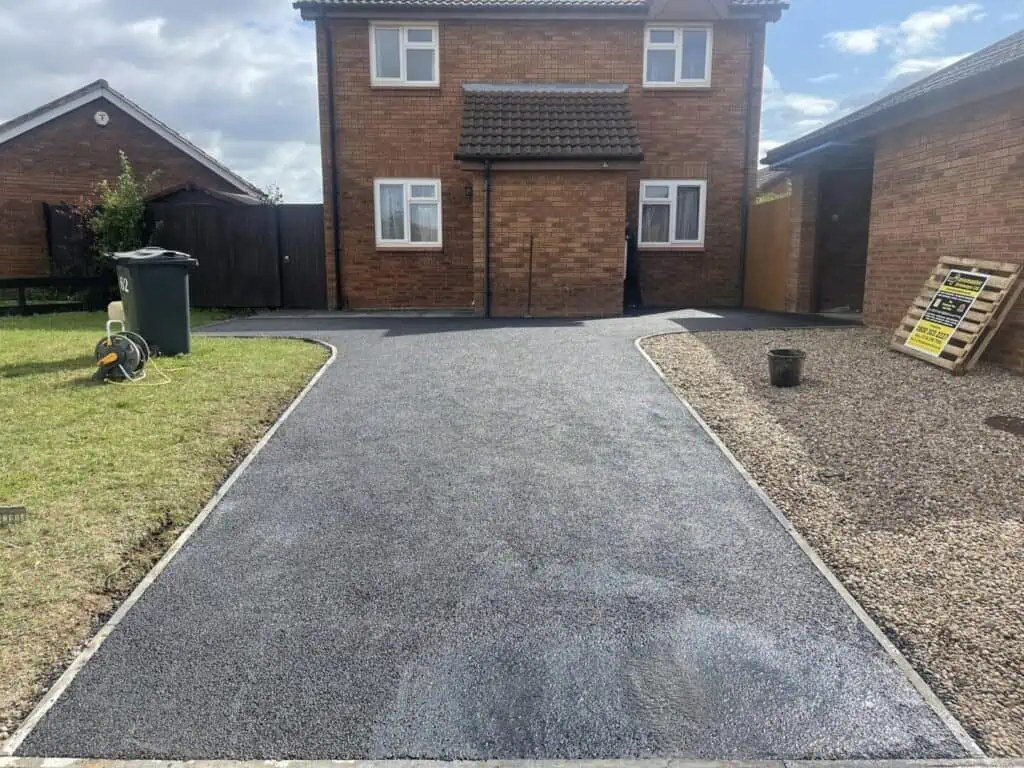
The continuous finish often makes sense on broad drives and longer approaches where an intricate paved pattern would add unnecessary cutting and labour.
Block edges, entrance bands and paths can be added where they improve containment or make pedestrian movement clearer.
Sweeping, removal of leaves and careful washing are normally enough for regular upkeep. Oil and fuel spills should be dealt with promptly using products suitable for tarmac.
Local repairs can be carried out when damage is limited, although a patch may remain visible against the surrounding aged surface.
We measure the area, inspect the current surface and check the pavement, door, garage, drains, covers and boundaries. The parking layout and likely wheel routes are discussed.
Where a replacement is required, failed surfacing and unsuitable material are removed. The formation is prepared so the new supporting layers can be installed at the correct depth.
A suitable granular sub-base is placed and compacted in controlled layers. Paved edges, kerbs or other restraints are founded securely before the tarmac is laid.
Falls and channels are formed to manage rainwater within the property. The design must not rely on sending runoff onto the pavement or towards the building.
The specified tarmac layers are laid, levelled and compacted. Joints, edges and connections are finished while the material is workable.
The surface needs time to cool and settle before vehicle use. We explain the appropriate waiting period and provide maintenance and guarantee information.
The edge of a tarmac drive is one of its most vulnerable parts when it is left unsupported. Repeated wheel loading can cause it to crumble or spread, particularly where a vehicle cuts across a corner.
Secure kerbs or block-paved courses contain the surface and can create a defined entrance. At the house, a paved band or channel may provide a neat connection while helping control water. Every detail must still be tied into the correct levels and base.
Standard tarmac is impermeable. Surface water therefore needs a planned destination, such as a channel connected to a suitable system or a fall towards a permeable area within the property. Porous asphalt is a different construction and must be supported by compatible permeable layers.
Read the driveway planning permission guide before assuming a new impermeable front drive is permitted development.
This often occurs where the tarmac is not contained or vehicles repeatedly run over the edge. A proper repair must deal with the support as well as replacing loose material.
Fine surface marks and structural cracks have different causes. Movement below, tree roots, failed joints or an unstable widened section can all contribute.
Puddles may form because the drive has settled or the original falls were incorrect. Simply adding material to a low area can create another weak joint unless the cause is understood.
Heavy turning while the surface is very warm or newly installed can mark tarmac. Early-use guidance and sensible vehicle movement reduce the risk.
Petroleum products can soften bituminous surfaces. Spillages should be treated quickly without using aggressive chemicals that create further damage.
Keep leaves, soil and organic debris from building up at edges and drainage channels. Sweep the drive regularly and clean it using moderate pressure. Avoid directing a pressure washer closely into edges or joints.
Do not use solvent-based cleaners without confirming compatibility. Small cracks or edge failures should be assessed before they spread. Protect narrow corners from repeated wheel overruns and avoid sharp stationary steering where possible, especially during hot weather.
The quotation for tarmac driveways in Loughborough is shaped by the area, access, excavation, waste removal, sub-base, drainage, edging and whether the current drive can genuinely support an overlay.
Additional paving bands, steps, inspection covers, walls and complicated levels can add labour. A large open drive may be more efficient to install than a smaller frontage with restricted access and many detailed cuts.
See the full Loughborough driveway costs guide for advice on comparing specifications.
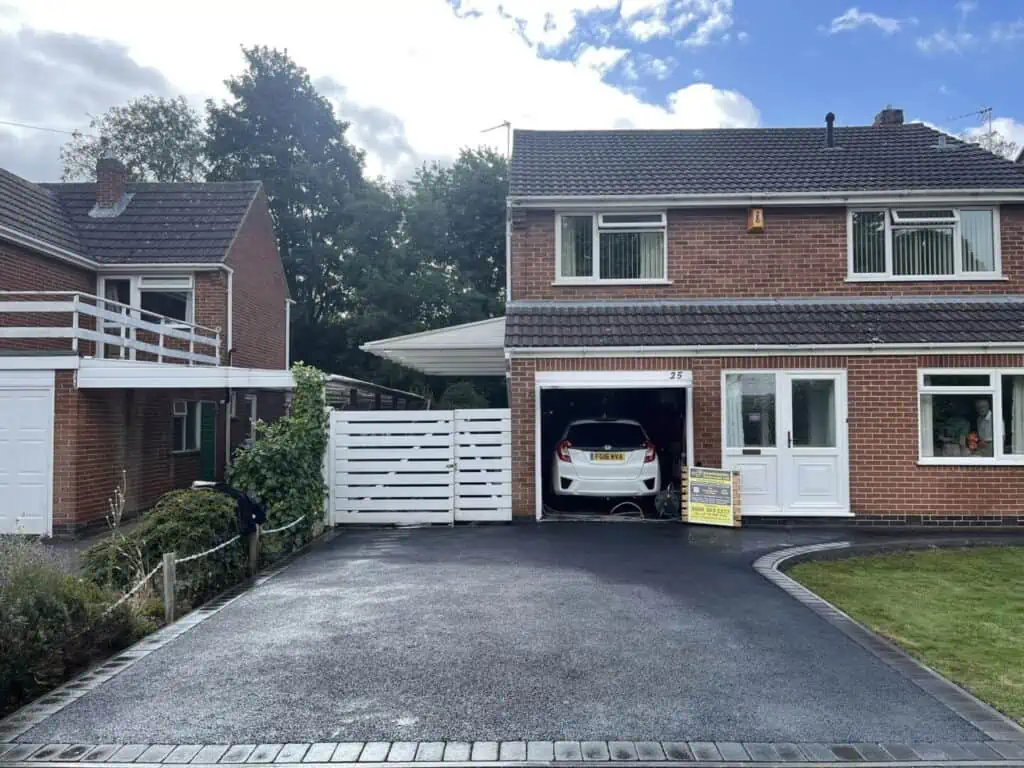
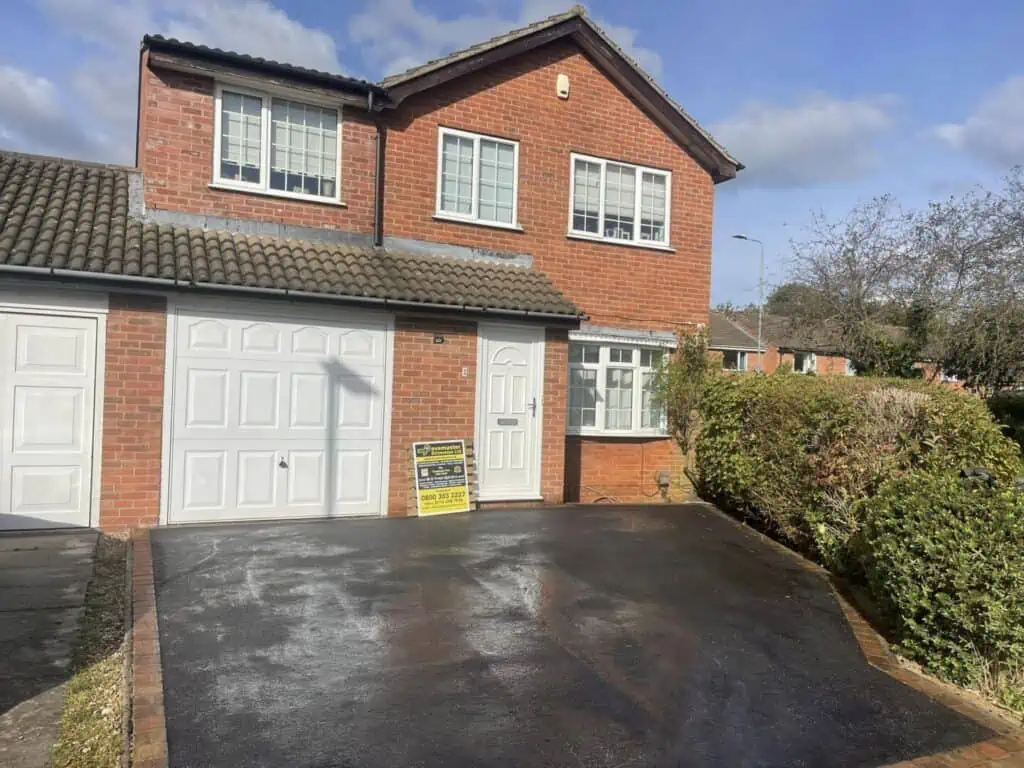
Pavemaster customer reviews
Eamonn
Google customer review
Tom and his gang did a fantastic job with our new tarmac drive. Didn't take long to do two and a half days. They are very reliable and just crack on with the job i highly recommend Pavemaster Driveways. Great job guys.
Joan Spencer
Google customer review
Tom's team did an amazing job laying our brick driveway. They worked steadily with care and attention to detail.
BarbsH
Trustpilot | 19 June 2026
The guys who prepared the hardcore and tarmac layers were friendly, efficient, and cleaned up after themselves.
Nassar Malik
Trustpilot | 2 April 2026
I recently had Pavemaster Driveways install a resin-bound driveway at my home, and I couldn't be happier with the entire experience.
Paul
Trustpilot | 12 February 2026
Brilliant job of block paving my drive.
Martin C
Yell | 1 November 2024
Tom and his team did my Grandparents driveway and because of their excellent workmanship they have had their back garden landscaped and designed by Tom again.
Compare tarmac with block paving in Loughborough or read the detailed tarmac versus block paving guide. For a decorative aggregate finish, explore resin driveways.
Only when the existing bound base is stable, correctly shaped and low enough to accept the additional layer. A site inspection is required.
It can be, provided the gradients, compaction, edges and drainage are properly designed. Steep or complex sites require individual assessment.
Yes. Properly founded block borders can contain the surface and create a path, entrance band or visual frame.
The safe waiting period depends on the installation and weather. The team will provide project-specific handover advice. Avoid assuming it is ready as soon as it feels firm underfoot.
Routine sealing is not normally treated in the same way as imprinted concrete. Products marketed as tarmac coatings should only be used after checking their suitability and the condition of the surface.
Qualifying new installations include a 10-year guarantee, subject to the terms and maintenance requirements explained with the project.
Ready to get started?
Free no-obligation quotations for suitable driveway, patio and landscaping projects.
 WhatsApp us