
Eamonn
Google customer review
Tom and his gang did a fantastic job with our new tarmac drive. Didn't take long to do two and a half days. They are very reliable and just crack on with the job i highly recommend Pavemaster Driveways. Great job guys.
Concrete surface options
Concrete imprint driveways loughborough with practical site guidance, clear specifications and free measured quotations for suitable projects.
Free no-obligation quote
Tell us about your project
Concrete surface options
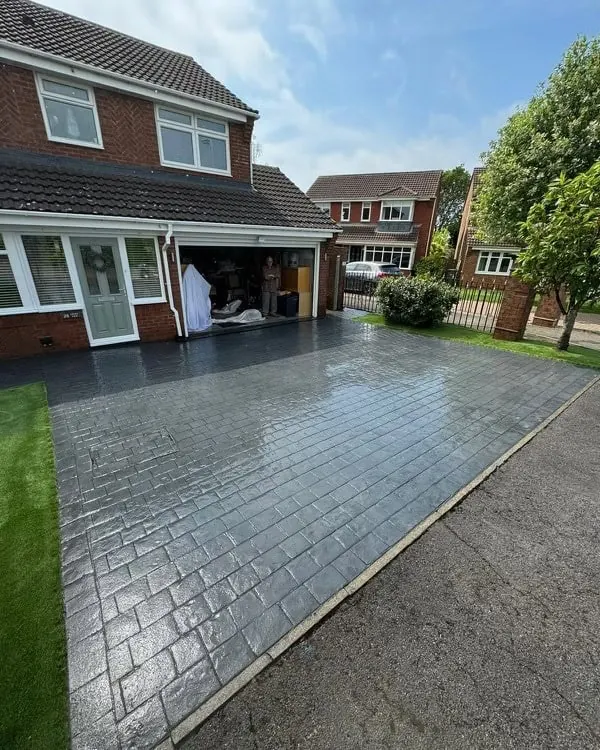
Pattern imprinted concrete is installed as a continuous slab. Colour hardener is worked into the surface, a release agent is applied and textured mats are pressed into the concrete while it remains workable. After cleaning and curing, the drive is sealed.
The process requires organisation because placement, colouring and imprinting happen within a limited working period. Access, weather, concrete supply and the size of each pour need to be planned in advance.
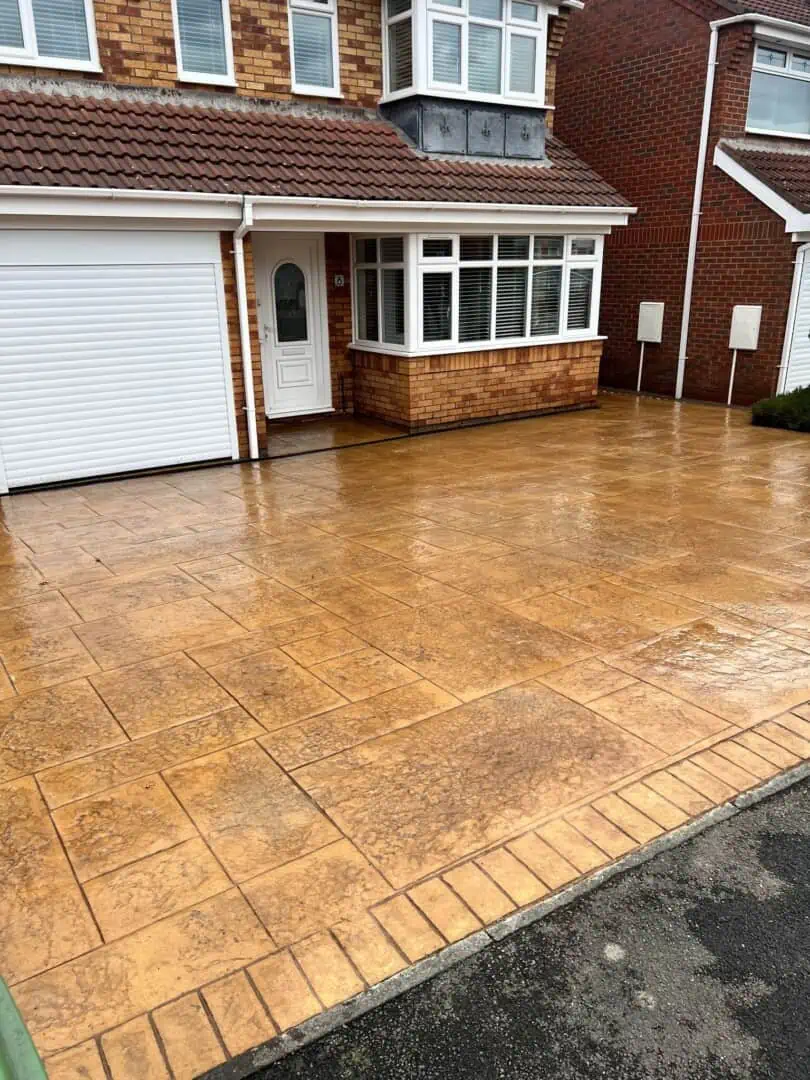
The chosen pattern should suit the scale of the frontage. Large random-stone or slate effects can work on broad areas, while smaller sett or cobble patterns may provide more detail around compact entrances. Colour should be considered beside the property's brick, render, roof and existing walls.
Concrete surface options
There is no loose jointing sand between individual blocks, which can reduce the opportunity for weeds to establish in joints.
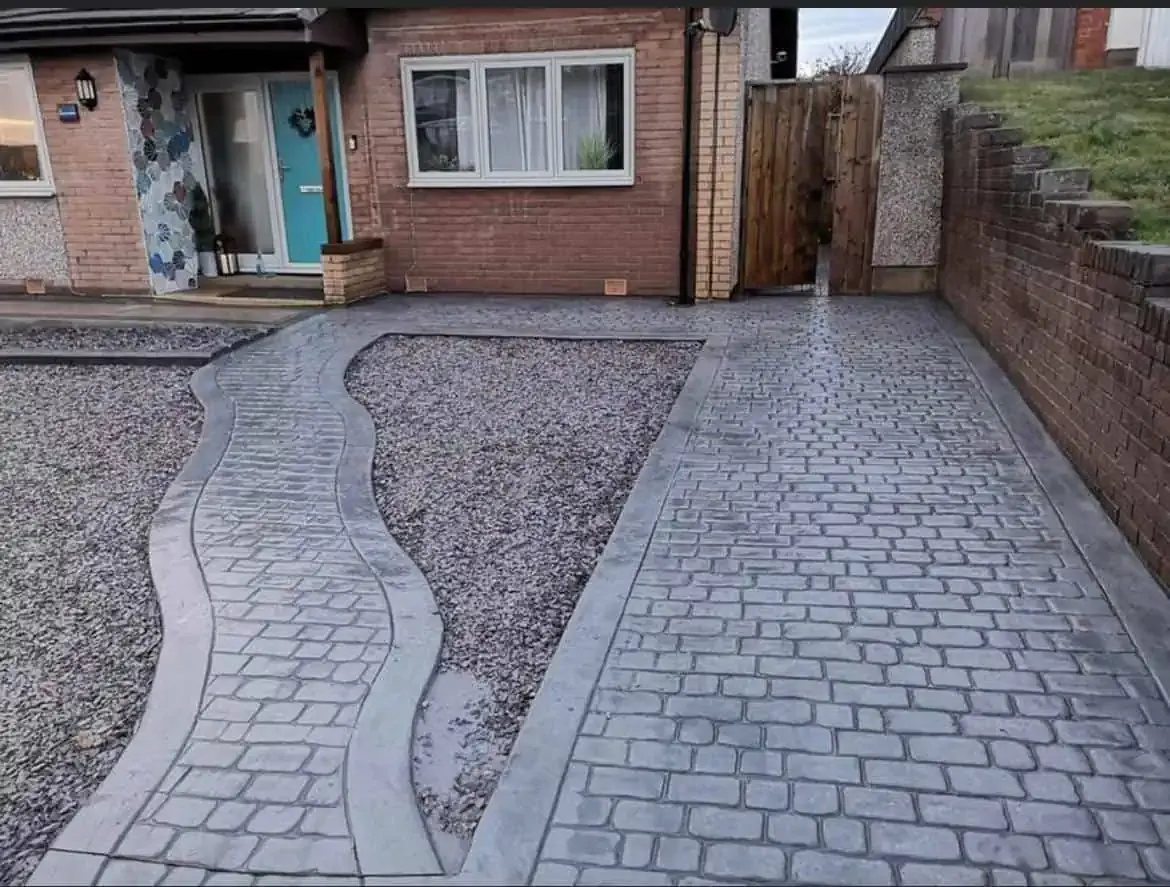
Texture mats can create paving, sett, slate and stone effects, with colours selected to suit the property.
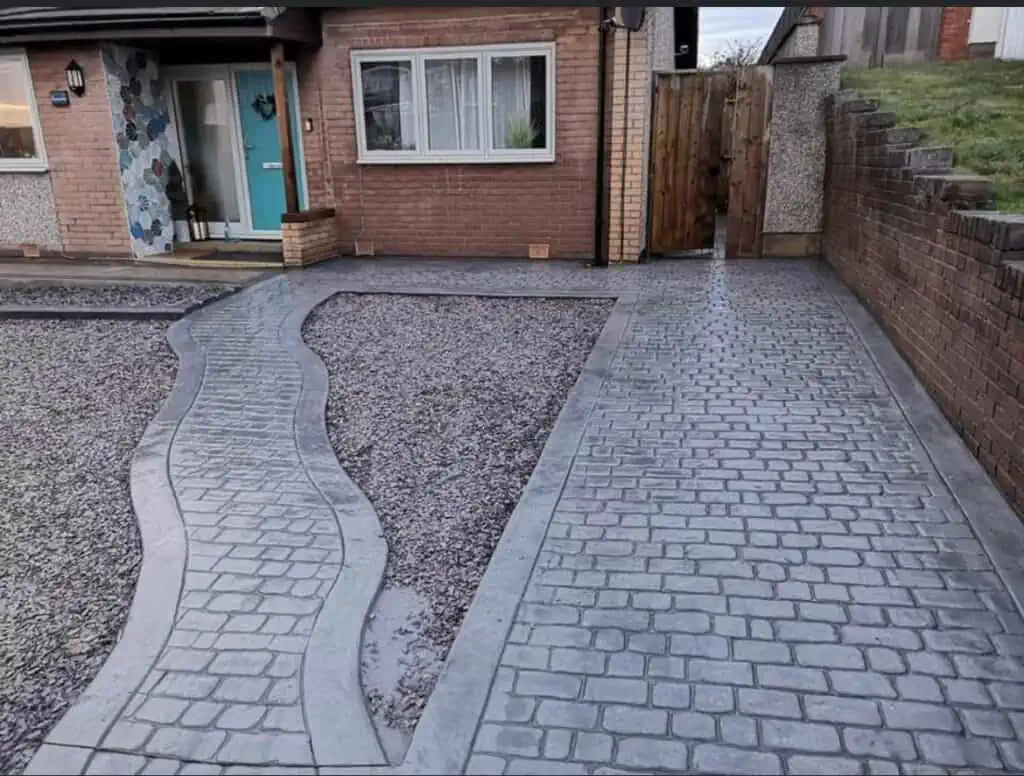
Contrasting colour or patterned bands can mark edges, paths or entrance areas without installing separate paving throughout the field.
The sealed surface can be swept and washed, although textured areas should still be kept free from moss and debris.
A correctly specified concrete slab provides a firm parking area. The ground preparation and joint layout remain critical to performance.
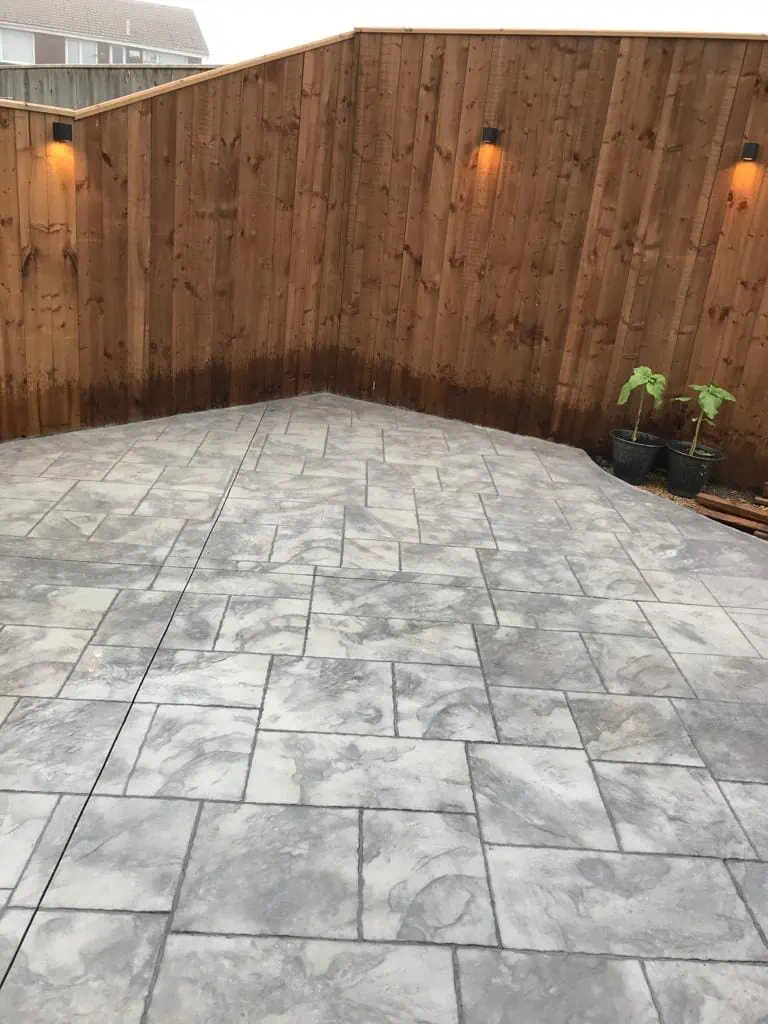
Concrete naturally expands, contracts and can develop fine cracks. Movement joints are installed to manage where movement occurs, but no responsible contractor should promise that a large external concrete slab can never crack.
Access to underground services is also different from block paving. Cutting and reinstating imprinted concrete is likely to leave a visible repair. The location of drains, ducts and inspection covers should therefore be considered before the pour.
The sealed surface needs periodic maintenance. Resealing frequency depends on use, exposure and the product applied. Inappropriate or excessive sealer can create a glossy or slippery finish, so the correct compatible material and preparation are important.
The drive is measured and the parking route, levels, drainage, pattern, colour, borders and inspection covers are discussed.
The existing surface and unsuitable material are removed where required. A suitable compacted sub-base is installed to support the slab.
Edge forms or permanent borders are constructed. Channels and covers are set to level, and the agreed reinforcement is placed.
Concrete is delivered, placed, levelled and finished within the planned pour area. Correct organisation is essential to avoid cold joints and inconsistent workability.
Colour hardener and release agent are applied. Mats are positioned and pressed in sequence to create the selected texture.
Movement-control joints are formed or cut in planned locations. The surface is cleaned at the appropriate stage and sealed after suitable curing and preparation.
Vehicle use, cleaning, winter care and future resealing are explained. The applicable guarantee information is provided.
Pattern imprinted concrete is normally an impermeable surface. It needs falls and drainage that keep runoff within the property and away from doors, garages and neighbouring land.
Channels can be included at the pavement or building where required, with water directed to an appropriate point. The finished concrete level must leave safe clearance below damp-proof courses, air bricks and thresholds.
Read the planning permission guide for the general rules affecting impermeable front-garden surfacing.
Colour charts provide an indication, but finished appearance varies with materials, application, curing, release agent and sealing. Viewing genuine portfolio images helps set realistic expectations.
Texture improves the patterned appearance but deep or poorly maintained profiles can hold dirt and organic growth. The sealer should be suitable for an external vehicle surface, and anti-slip additive may be considered where specified.
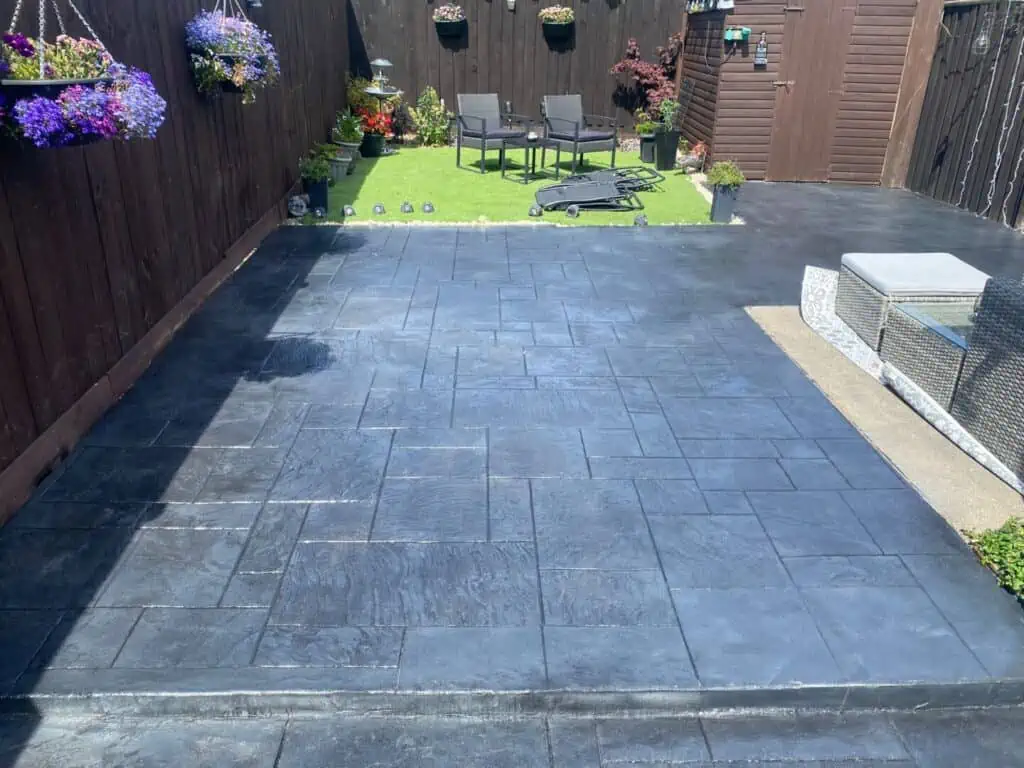
Very dark colours can make a large drive visually dominant. A controlled mid-tone with a simple border often connects more naturally to a house and garden.
Cracks can form through movement, poor preparation, inadequate joint planning or external forces. Repairs may remain visible because colour and pattern are difficult to match exactly.
UV exposure, traffic and cleaning gradually wear the coating. New sealer should not be applied over dirt, moisture or incompatible old products.
Incorrect timing, finishing, materials or freeze-thaw exposure can affect the surface. The cause should be assessed before applying a cosmetic coating.
Moss, algae, standing water or excessive sealer can reduce grip. Cleaning, drainage and the correct resealing method are important.
Some variation is inherent in a hand-finished decorative surface. Severe patchiness can also result from inconsistent application or curing.
Sweep and wash the drive to remove soil and organic matter. Deal with oil and other spills promptly using a compatible cleaner. Avoid metal blades and harsh de-icing salts unless the product and installer guidance confirms they are suitable.
Inspect the sealer as it wears. Resealing should follow proper cleaning and drying, with any damage reviewed first. Applying repeated thick coats can trap moisture or create an undesirable finish.
Area, access, excavation, concrete quantity, reinforcement, drainage, pattern, colour, borders and the number of separate pours influence the quotation. Detailed curves and multiple colour sections require more preparation and finishing time.
The cost should be assessed against the complete construction rather than comparing only the visible pattern. Read driveway costs in Loughborough for the full comparison checklist.
Pavemaster customer reviews
Eamonn
Google customer review
Tom and his gang did a fantastic job with our new tarmac drive. Didn't take long to do two and a half days. They are very reliable and just crack on with the job i highly recommend Pavemaster Driveways. Great job guys.
Joan Spencer
Google customer review
Tom's team did an amazing job laying our brick driveway. They worked steadily with care and attention to detail.
BarbsH
Trustpilot | 19 June 2026
The guys who prepared the hardcore and tarmac layers were friendly, efficient, and cleaned up after themselves.
Nassar Malik
Trustpilot | 2 April 2026
I recently had Pavemaster Driveways install a resin-bound driveway at my home, and I couldn't be happier with the entire experience.
Paul
Trustpilot | 12 February 2026
Brilliant job of block paving my drive.
Martin C
Yell | 1 November 2024
Tom and his team did my Grandparents driveway and because of their excellent workmanship they have had their back garden landscaped and designed by Tom again.
Compare imprinted concrete with block paving or resin bound surfacing. The best driveway surface guide explains differences in joints, maintenance and repairs.
Nearby service pages include Mountsorrel, Sileby, Rothley and Barrow upon Soar.
No. The pattern is pressed into a concrete slab. It creates the appearance of separate units but remains one continuous concrete surface.
Concrete can crack. Correct sub-base preparation, reinforcement and joint planning manage the risk, but a guarantee of no cracks would be unrealistic.
There is no single interval for every drive. Traffic, exposure, cleaning and the product used affect wear. The surface should be inspected before resealing.
Yes, but cutting and reinstating the slab can leave a visible repair. Known covers and likely service routes should be planned before installation.
Moss, algae, standing water or excessive sealer can reduce grip. Correct drainage, cleaning and compatible anti-slip sealing help manage the surface.
Yes, within the available system. Selection should consider the property and practical maintenance rather than relying on a very small sample alone.
Ready to get started?
Free no-obligation quotations for suitable driveway, patio and landscaping projects.
 WhatsApp us