
Eamonn
Google customer review
Tom and his gang did a fantastic job with our new tarmac drive. Didn't take long to do two and a half days. They are very reliable and just crack on with the job i highly recommend Pavemaster Driveways. Great job guys.
Block paving options
Block paving driveways loughborough with practical site guidance, clear specifications and free measured quotations for suitable projects.
Free no-obligation quote
Tell us about your project
Block paving options
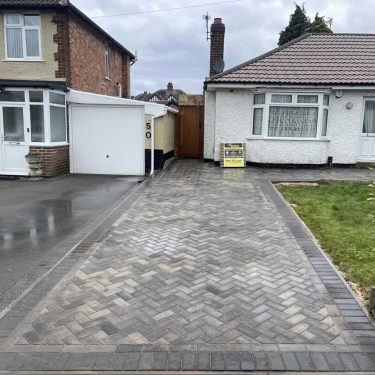
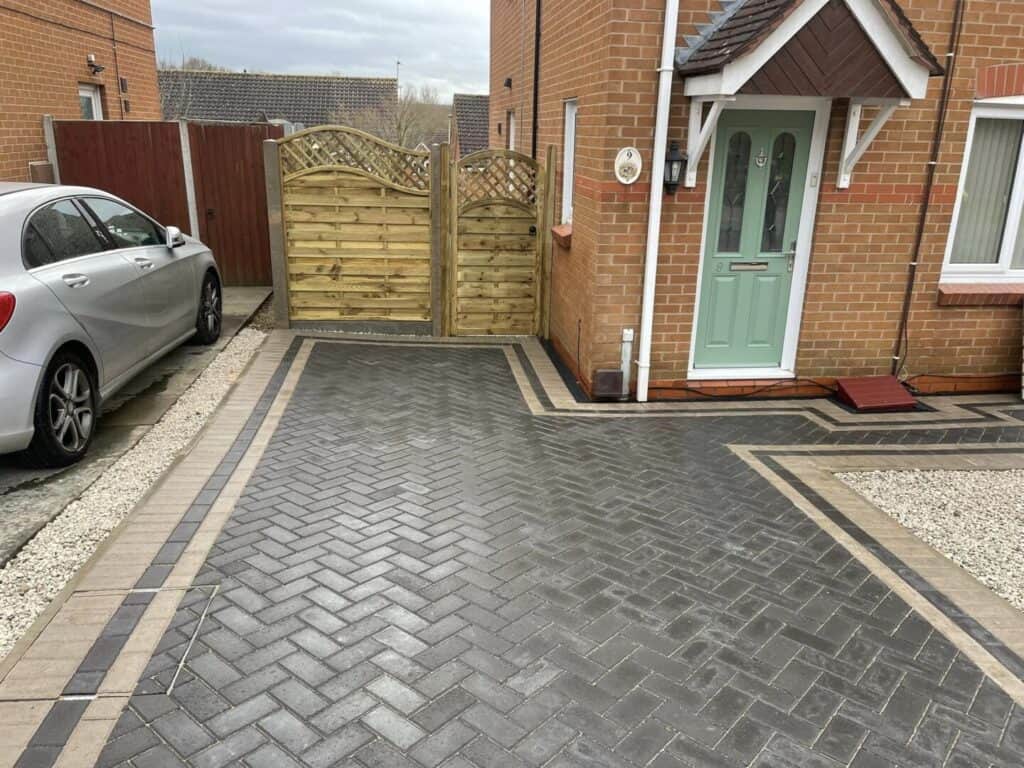
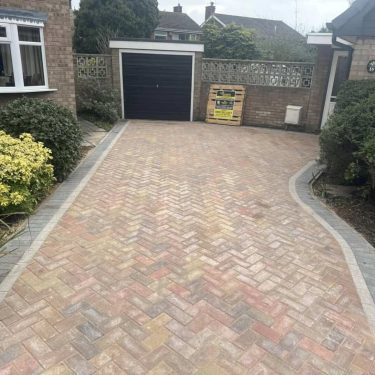
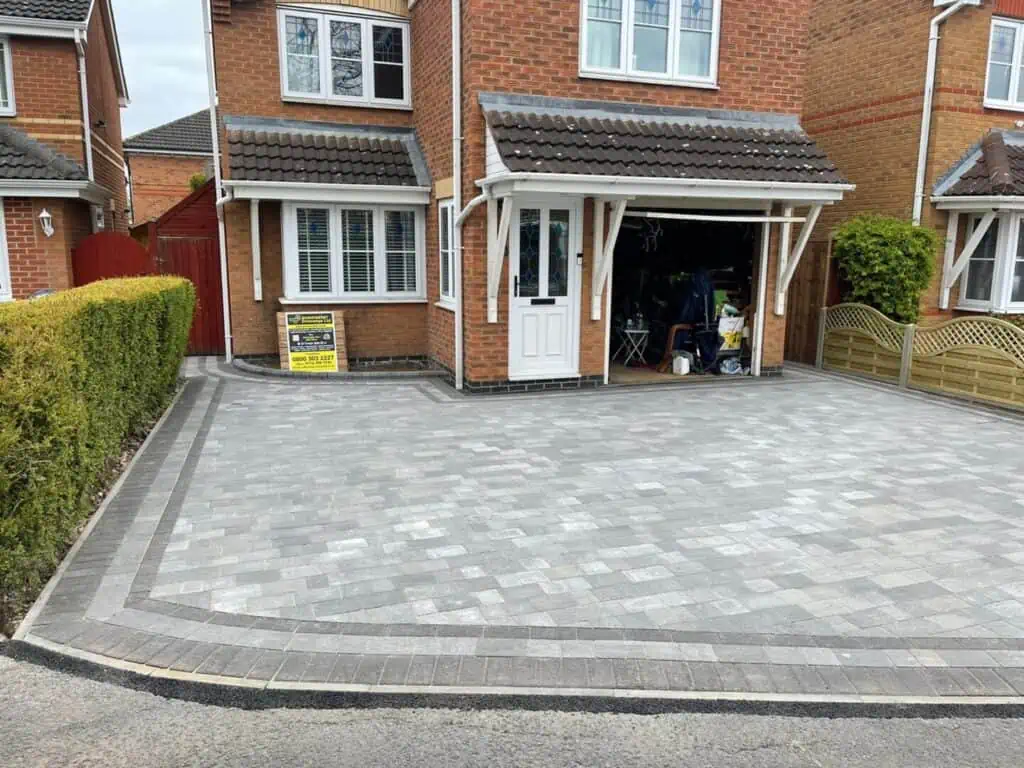
Block paving works particularly well where the frontage needs visual organisation. A herringbone field can define the main vehicle area, while a contrasting edge or band can identify a route to the door. Curves, inspection covers and shaped boundaries can be finished with accurate cuts rather than leaving small loose pieces.
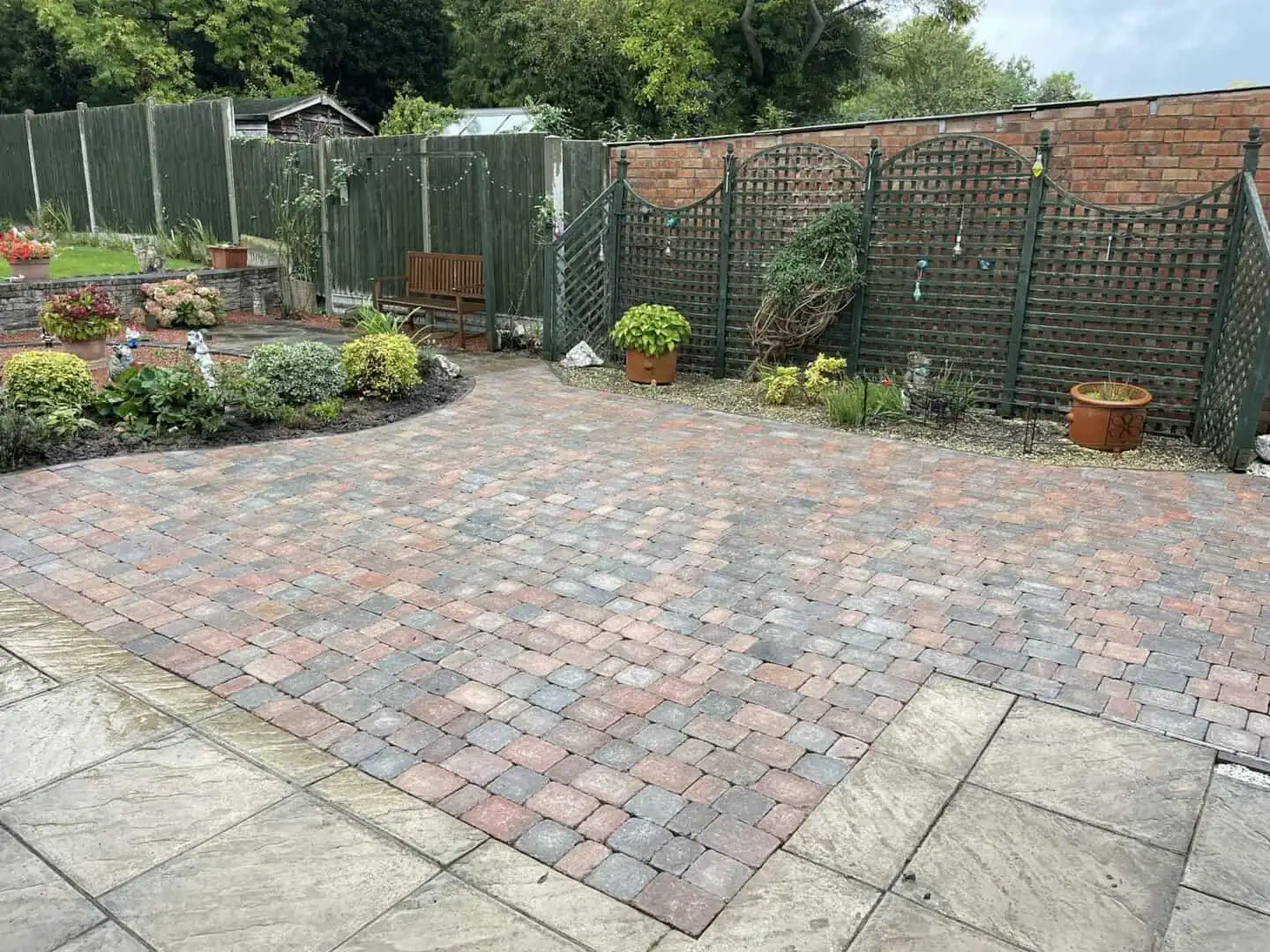
The design should relate to the house. Warm mixed blocks may suit traditional red brick, while controlled greys can create a quieter finish beside render or modern extensions. Using too many colours and patterns can make a compact area feel divided, so we normally recommend a limited palette with detail used for a practical reason.
Individual blocks may be lifted for access to underground services or focused repairs. That is a useful advantage, but it does not mean movement can be ignored. Sunken or rocking blocks should be relaid only after the failed bedding, support or drainage issue has been corrected.
Block paving options
Standard block paving is laid with narrow sand-filled joints over a dense supporting construction. Water runs across the finished surface and must be directed towards an appropriate drainage point or permeable area.
Permeable block paving is a complete system. It uses blocks and wider joints designed to allow water through, together with open-graded bedding and supporting layers that can temporarily store and disperse rainfall. Replacing only the top blocks does not turn a standard impermeable base into a permeable drive.
The site, ground conditions and drainage route need to be assessed before choosing a permeable system. Official front-garden paving rules should also be checked where a new or replacement surface is planned.
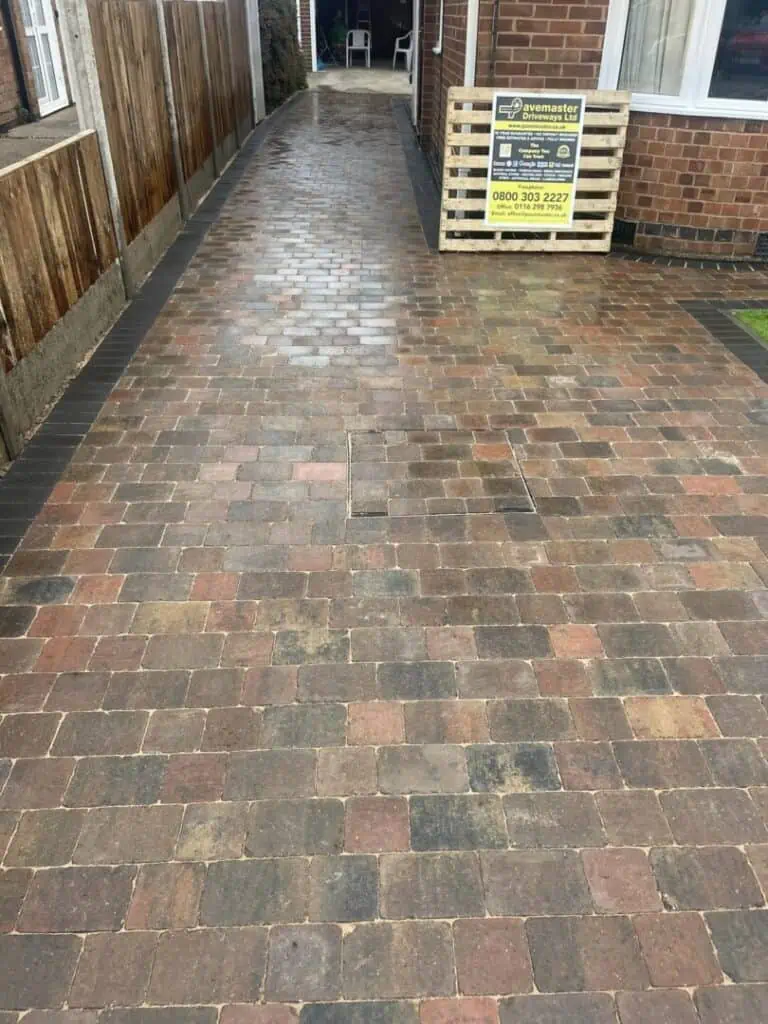
Herringbone layouts, edge courses and restrained colour changes can suit straight, curved or shaped frontages.
Sound blocks can often be lifted and relaid after local service work or correction of a small area.
A band or colour change can guide people to the entrance without introducing an awkward raised path.
Properly founded edge restraints help contain the paving and resist spreading under vehicle movement.
Block format, colour and texture can be selected to work with existing brickwork, walls and garden materials.
The intended vehicle positions, turning movements, entrance and walking route are marked out. Finished levels are checked at the pavement, house and boundaries.
Existing slabs, concrete, tarmac, gravel and unsuitable supporting material are removed where a full replacement is needed.
A suitable granular sub-base is placed in layers and compacted evenly. Extra attention is given to wheel routes, widened sections and connections to old construction.
Perimeter blocks, kerbs or other restraints are founded securely so the paved field remains contained.
The bedding layer is prepared to a consistent level and should not be used to make up large variations in the base.
Blocks are laid in the agreed pattern. Accurate cuts are made at edges and covers, the surface is compacted and the joints are filled using the appropriate material.
A 45-degree or 90-degree herringbone arrangement is commonly used on driveways because the interlocking pattern handles turning forces well. Stretcher bond can work for paths, patios and lightly loaded areas, but the correct choice depends on the block system and intended use.
Borders should be wide enough to look deliberate and be properly supported. Small triangular pieces at curves or covers should be avoided where a better set-out can produce stronger cuts. The design should also keep the main pattern aligned with the most visible sight line from the pavement or house.
Settlement can result from weak support, poor compaction or unsuitable material beneath the blocks. Lifting and adding a thin layer of sand will not solve movement in the sub-base.
Missing or failed edge restraints allow the paved field to open. Joints widen and blocks can begin to rotate or move.
Uneven bedding, local movement or lost jointing material can leave blocks unstable. The area should be lifted and reset after the cause is identified.
Seeds normally establish in debris held within joints. Regular sweeping and replenishment of lost jointing material help reduce growth.
Efflorescence can appear naturally on new concrete blocks as salts move to the surface. It often reduces over time. Aggressive chemical treatment should be avoided without manufacturer guidance.
Sweep the drive regularly and keep soil away from the joints. Replace jointing sand when it has been removed by weather or cleaning. Pressure washing can be used carefully, but the nozzle should not be held close enough to empty or damage the joints.
Treat oil and organic stains promptly with products suitable for concrete paving. Sealing is optional rather than essential. A sealer should only be applied to clean, dry, stable paving using a compatible product and the correct preparation.
For a lower-joint alternative, compare tarmac driveways and resin bound driveways.
Block type, area, pattern, curves and border details all influence the quotation. A straightforward herringbone field with one perimeter course normally involves fewer cuts than a multi-colour design with circles, several bands and shaped sections.
Preparation, access, drainage, steps, covers and disposal can be more significant than the price difference between two standard blocks. The quotation should separate essential construction from optional appearance upgrades.
Read the driveway cost guide for a full checklist.
Pavemaster customer reviews
Eamonn
Google customer review
Tom and his gang did a fantastic job with our new tarmac drive. Didn't take long to do two and a half days. They are very reliable and just crack on with the job i highly recommend Pavemaster Driveways. Great job guys.
Joan Spencer
Google customer review
Tom's team did an amazing job laying our brick driveway. They worked steadily with care and attention to detail.
BarbsH
Trustpilot | 19 June 2026
The guys who prepared the hardcore and tarmac layers were friendly, efficient, and cleaned up after themselves.
Nassar Malik
Trustpilot | 2 April 2026
I recently had Pavemaster Driveways install a resin-bound driveway at my home, and I couldn't be happier with the entire experience.
Paul
Trustpilot | 12 February 2026
Brilliant job of block paving my drive.
Martin C
Yell | 1 November 2024
Tom and his team did my Grandparents driveway and because of their excellent workmanship they have had their back garden landscaped and designed by Tom again.
Compare block paving with tarmac or explore pattern imprinted concrete for a joint-free decorative effect.
Local pages include Quorn, Barrow upon Soar, Mountsorrel and Rothley.
Herringbone is commonly selected because the blocks interlock strongly under vehicle turning. The chosen block manufacturer's guidance and the project specification should still be followed.
Sound blocks may be reused after lifting and cleaning, but the saving depends on their condition, quantity and the labour required. Failed support must be rebuilt before relaying.
Most driveway blocks have a textured surface suitable for external use. Algae, moss, leaves and inappropriate sealers can reduce grip and should be managed.
Most visible growth begins in debris collected in open joints. A stable construction, full joints and regular sweeping reduce the problem.
Yes. Covers can be adjusted or replaced with recessed units where appropriate, and the paving should be cut accurately around them.
Qualifying new installations include a 10-year guarantee, with maintenance and applicable terms explained at quotation and handover.
Ready to get started?
Free no-obligation quotations for suitable driveway, patio and landscaping projects.
 WhatsApp us